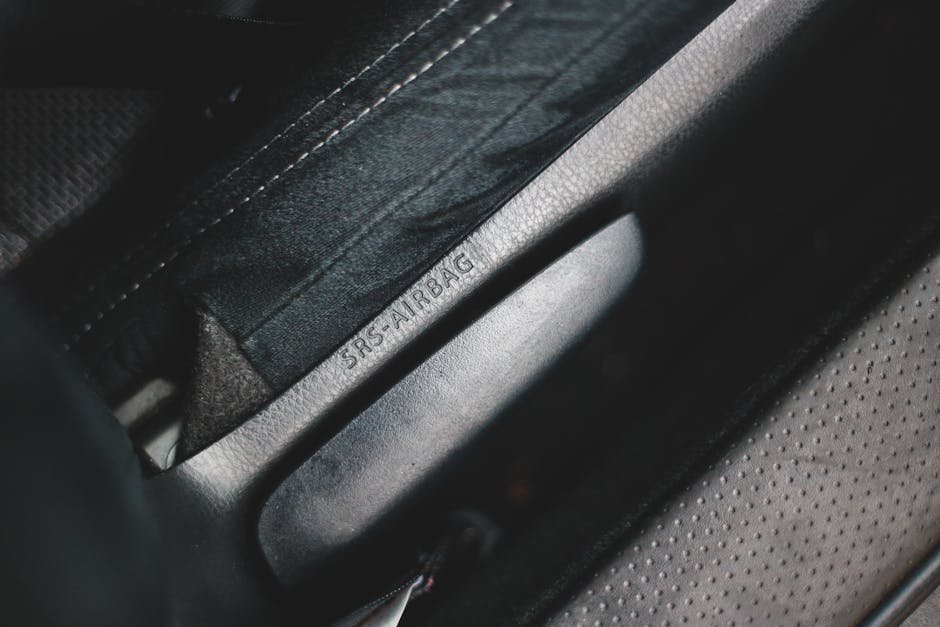
Airbag Tech: How Those “Puffs” Actually Save You
Ever wonder what happens right after a crash? That “boom” when something pops to save your life? Not just magic, friend. It’s some seriously clever airbag technology at work. This vital car safety bit? It’s evolved right here on our California freeways. Forget the simple puff. Modern airbags are a wild combo of chemistry, physics, and super sharp sensors. They keep us safe whether we’re cruising the PCH or stuck in total gridlock. Bringing a body to a stop from high speed in just 100 milliseconds, with no major harm? Yeah, that’s a massive engineering headache.
Airbags: Your Life Depends on a Chemical Bang
At its core, an airbag goes off because of a controlled chemical explosion. Sounds nuts, right? But it’s totally true. Back in the day, sodium azide was the stuff. Get this solid chemical hotter than 300 degrees Celsius, and bam! It instantly changes into gas. Just 50 grams of the stuff could make almost 70 liters of nitrogen gas. That fills a bag in a blistering 30 milliseconds.
Early tries at airbag systems using compressed air? A total bust. The old spring-based sensors often couldn’t tell a real crash from a fender bender. And that compressed air? Not fast enough to inflate the bag and stop injuries. So, you didn’t see them everywhere.
Luckily, newer chemicals, like guanidine nitrate, are popular now. They’re less toxic. Also, less sensitive to moisture. Way safer.
Smart Sensors & ECUs: No More Pothole Surprises
Remember when airbags might go off if you just hit a big pothole? Big problem with the old designs. Those ancient electrical switches? Couldn’t tell a really bad crash from a simple jolt. They just didn’t have enough info on how fast things were slowing down.
Today, advanced systems use MEMS (Micro-Electro-Mechanical Systems) sensors. And they buddy up with savvy Electronic Control Units (ECUs). These capacitance-based methods really nail the crash’s severity. Your car’s ECU pulls info from a whole bunch of places: wheel speed sensors, gyroscopes, brake pressure sensors, even seat sensors that know if someone’s there.
An intricate algorithm then picks the exact moment to trigger the gas generator. And decides how much to inflate the airbag. The igniter fires in a scant two milliseconds. The bag fills within 20 to 30 milliseconds. Seriously fast. Which is critical for protection.
The Genius: Allen K. Breed’s Big Ideas
The whole commercial airbag thing? Huge props go to Allen K. Breed. He founded Joyson Safety Systems. His inventions fixed those early, painful problems.
First, he really boosted sensor accuracy with a clever ball and tube setup. A steel ball, held by a magnet, would break loose during a collision due to inertia. Snap! Closes a circuit, signals the inflator. But his biggest move? Swapping out compressed air for chemical explosives. This simple, revolutionary change, using sodium azide, made airbags widespread. His patented design showed up first in Chrysler’s 1988 Dodge Daytona. Huge success. Prompting other automakers to jump on board.
The Takata Recall: A Toxic Time Bomb
So, sodium azide was a breakthrough. But. It had two big issues. First, the gas it made was poisonous (mostly sodium metal). Scientists later fixed this by mixing in potassium nitrate and silicon dioxide.
The second issue became a global nightmare: sodium azide is famous for sucking up moisture. If there were any design flaws or tiny leaks in manufacturing, the chemical would get damp. Then, when a crash triggered it, that moisture-laden chemical could explode violently. It’d rupture airbags. And blast shrapnel everywhere. Right at passengers. Guess what? This is exactly what happened with the infamous Takata airbags. So bad, it drove the company into bankruptcy. Total wake-up call for strict quality control. And another thing: it showed we definitely needed superb drying agents in those airbag parts.
Inflate and Deflate: Cushioning Science
Interestingly, airbags don’t just fill up. They also let air out. This dual action is super important for cushioning impacts and slowing your body during a crash. The airbag strategically spreads the impact force. Over a larger area. Less pressure on one spot.
You’ll see vent holes in airbags. They are super important. They let air escape carefully. This means the airbag deflates while still offering resistance. This bit of controlled deflation gives your body a little more time to stop. Seriously cuts down on severe injuries.
Seatbelts Are NOT Optional
Okay, real talk. Airbags are amazing. But they are absolutely, without a doubt, designed to work with your seatbelt. Seriously, never skip buckling up. Some car models? They won’t even deploy airbags if you’re unbelted. Good reason too.
Airbags inflate at crazy speeds. Around 320 kilometers per hour. If you’re not restrained? And you hit that rapidly deploying airbag? It can be more lethal than the actual accident. Modern seatbelts are also pretty smart. They’ll slightly loosen up, using a torsion bar, during a hit. This lets your upper body move forward just a tiny bit. Cushions the first blow. Before fully holding you. Even with a seatbelt on, your head and neck can still snap forward in a “pendulum movement” during a high-speed accident. Airbags fill that critical space.
So next time you’re driving, remember the insane science protecting you. Making those California drives feel a little bit safer.
FAQs
Q: What went wrong with early airbag designs?
A: Early airbags sucked mostly because compressed air was too slow. Couldn’t fill fast enough to prevent injury. And their sensors? Not good enough to reliably detect a crash.
Q: Why were Takata airbags so dangerous?
A: That sodium azide propellant in Takata airbags? It absorbed moisture over time. Bad manufacturing. Then, when triggered, that moisture caused violent explosions. Blew up the inflator. Pushed out dangerous metal shrapnel.
Q: Why wear a seatbelt, even with airbags?
A: Airbags inflate crazy fast (like 320 km/h!). If you’re not held by a seatbelt, hitting that deploying airbag can actually cause worse injuries. Maybe even deadly. Seatbelts ensure you’re exactly where you need to be. So the airbag can protect you right.