Wormhole Travel: Can We Actually Zip Through Space?
You know that feeling? A drive from LA to San Francisco, and it feels like forever? Now, picture a trip that drags on for 142,000 years. Yeah. Not a quick one. That’s how long it’d take us, even with our speediest rockets, to hit Alpha Centauri B – our nearest exoplanet buddy, only 4.37 light-years away. Suddenly, our need for speed hits a universe-sized wall. But what if there was a cheat code? A super-fast lane for actual Wormhole Travel? This isn’t just the stuff of movies anymore; smart people are seriously looking into it.
Interstellar Travel: Not Just a Quick Trip
Seriously, for ages, getting anywhere was a massive pain. Horses for months? Yep, normal stuff. Then the 20th century roared in. Changed everything. Trains, cars, planes – earth felt small. Global commutes, normal. Speedy travel: a real thing.
But hey, we humans are a bit greedy. Always pushing that destination further out. Mars? Pfft. Practically next door, cosmically speaking. So, we’re eyeing exoplanets, like Alpha Centauri B. It’s only 4.37 light-years off, basically a quick hop. Barely four years if you could go light speed. Sounds easy.
But hold up. We can’t actually hit light speed. Our fastest probes crawl at around 32,000 kilometers an hour. That’s peanuts. Like, 0.0033% of light speed. At that snail’s pace, getting to Alpha Centauri B would drag on for a staggering 142,000 years. Think about it. Longer than all of human history, documented.
And another thing: designing a ship for generations? Hundreds of millennia, cruising? Stocking enough grub, water, and fuel for that long? What about keeping everyone from going nuts and tearing each other apart? Even if long-lost grandkids finally got there, imagine the letdown. What if there’s jack squat worth seeing? That’s 150,000 years of feeling totally bummed about the cosmos.
Wormholes: The Ultimate Cosmic Cheat
So, enter the wormholes. The ultimate shortcut. A portal. A straight-up hole in space-time itself. Picture the universe’s fabric. Folding it. Then punching a hole right through. Boom. Distances that’d take forever? Instantly traversable.
This idea ain’t new, by the way. It first surfaced in Albert Einstein’s General Relativity theory. He and his buddies, messing with space-time math, figured out these “holes.” Called ’em Einstein-Rosen bridges. Because gravity is just bent space-time. If it can bend, it can definitely twist into other forms – like a bridge to another galaxy. The numbers say it could work.
The Catch: Wobbly Tunnels and Weird Stuff
Hold up, though. While Wormhole Travel doesn’t break physics, those same laws throw up serious red flags. Like, major ones. Look, imagine a tunnel through a mountain. The issue? Those tunnel walls would be ridiculously unstable. They’d just slam shut, right there, crushing any poor traveler instantly. Worse? They could totally explode, supernova style, taking out a whole star system.
To even keep one open, we’d need exotic matter. This is stuff with negative mass-energy density. Think the exact opposite of a star, pulling energy straight from empty space. Sounds wild. It might exist, theoretically, but nobody’s found squat. Some brainiacs eye dark energy as a long-shot option, but even then, the power needed to mess with it? Monumental. We just don’t have the gear.
And another thing: even if we stumbled upon exotic matter, quantum mechanics has its own warnings. Inside a wormhole, it’d be a storm of freaky particles and harsh radiation. Likely fry anything passing through. There’s even a cruel cosmic joke: your awesome “shortcut” might end up way, way longer than just taking the scenic route.
Because, get this, tiny, tiny wormholes might be winking in and out of existence all around us. Too small to spot. Just quantum fluctuations in spacetime’s fabric. Maybe we could find super old, natural ones from the Big Bang. Or maybe use the universe’s own growth to make little ones bigger. But making one and actually keeping it steady? That’s the super-duper tough challenge.
Hunting for Natural Wormholes: Black Holes and Cosmic Strings
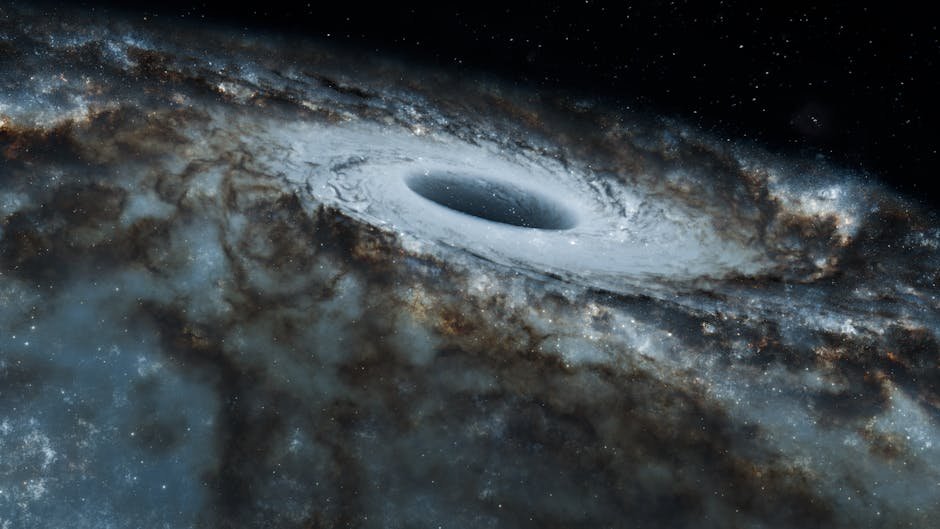
So, if building one is impossible right now, maybe we use what’s already out there? Black holes – top suspects. Some crazy theories suggest a ‘white hole’ on the other side, just spitting stuff out. But, white holes? Pure sci-fi for now.
Charged black holes, though, are totally real. Two of them, with opposite charges, could theoretically make a bridge. A wormhole! The catch? These charged black holes want to smash into each other. Total disaster. To stop that, we’d need a cosmic “spacer.”
Enter cosmic strings. These weird kinks from the Big Bang’s first second? Thinner than a proton. They cram more mass than Everest into a tiny centimeter. Picture a force that slices you like a lightsaber, perfectly still. Haven’t found ’em yet, but they’re plausible. And if you snag two oppositely charged black holes – and thread a cosmic string right between them – its massive gravity might just hold ’em open. Make that negative mass effect happen. Even then, one-way ticket or round-trip? Total mystery.
It sounds like a blockbuster movie, right out of Interstellar. Super exciting. But the truth is way more involved. Need a much better handle on how the universe bends and how it got here. So, before we pack for that Wormhole Travel road trip to Alpha Centauri? We’ve just got so much more to figure out.
Got Questions? We Got Answers. (Sorta.)
Q: How long to get to Alpha Centauri B with what we have now?
A: Well, flying at about 32,000 kilometers an hour, it’d take you about 142,000 years. To Alpha Centauri B, that closest exoplanet friend.
Q: So, what’s an Einstein-Rosen Bridge?
A: Basically, that’s the fancy, theoretical name for a wormhole. Einstein and his crew came up with it when messing with General Relativity. Said space-time could bend, making those shortcuts.
Q: What weird stuff do you need to keep a wormhole from collapsing?
A: Scientists figure you’d need “exotic matter.” It’s got negative mass-energy density. Haven’t found it yet, but it’s theoretically possible. Supposedly.