SF Architecture Tour: Iconic Buildings & Hidden Gems
SF skyline. Ever think about it? This city? Not just hills and fog, nope. It’s a hella wild mix of groundbreaking design and defiant urban planning. A San Francisco Architecture Walking Tour? It really shows how our most iconic stuff broke rules. Set trends. Created this unique vibe you only get HERE. Forget stale history lessons. We’re talking about buildings that literally tried to change the world.
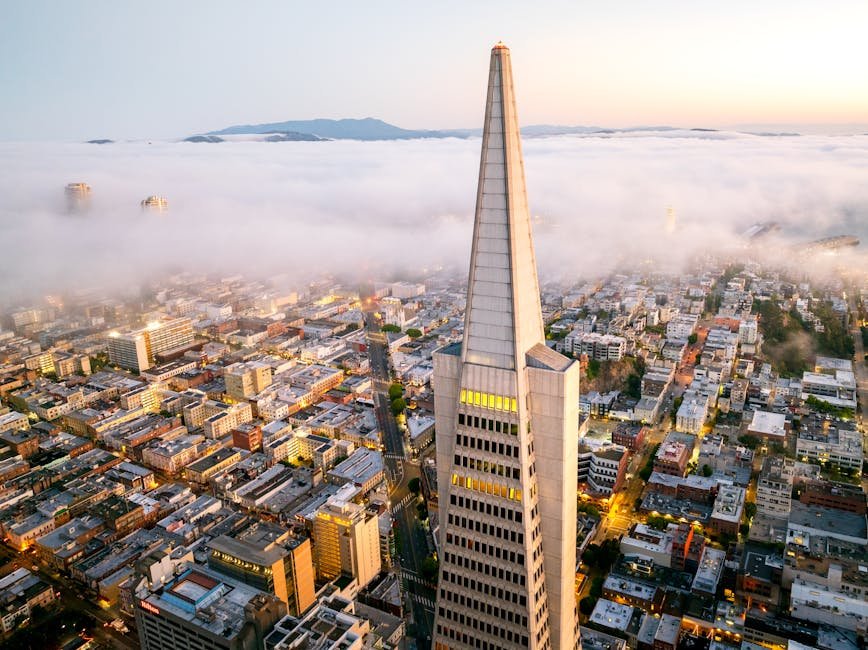
The Transamerica Pyramid: Maximizing Light and Views Downtown
That needle up there? The Transamerica Pyramid, obviously. Screams “San Francisco.” Built in ’72 by William Pereira. Not just for looks, though. The CEO wanted street light. City pushed for views. Brilliant. Compromise.
So, look close: two concrete bits on the sides. Elevators in one. Stairs, smoke in the other. Clever move. And another thing: the sky-high part got way more love than the street level. Typical. They even put in lopsided windows, so it doesn’t feel like the building’s tipping on you. But yeah, this whole thing? A real flashpoint. It, and others from its time, sparked “manhattanization” panic. Tall buildings. Unwelcome sameness downtown.
The Holiday Building: A Radical Glass Curtain Wall
Okay, rewind to 1917. The Holiday Building. Willis Polk’s baby. Named for Andrew Hallidie, the cable car guy. (Scottish engineer, actually.) This building? Revolutionary. Its whole front is glass. Not just windows, nope. A real glass curtain wall. Held up by metal.
And this was a huge change from other buildings back then. Really flipped that whole “window or wall” idea around. Polk basically said, “window is wall.” Wanted light everywhere inside. So, Walter Gropius did something like it in Germany, but this was right here. One of the first, if not the first, times this gutsy idea hit American architecture. Paved the way for, like, every glass skyscraper since. Even the “Mad Men” ones.
The Pacific Telephone and Telegraph Building: A Rejection of European Styles
Next up, the Pacific Telephone and Telegraph Building. From 1925. Seriously beautiful. First modern skyscraper SF ever had. Base has heavy Sierra Nevada granite. Terracotta on top. Not just pretty, though. It fireproofed the steel. Smart.
Because after WWI, things changed globally. Architects, like Pflueger, straight-up rejected European stuff. Too much destruction. Instead, this building? It’s all Mayan and Chinese. Super unique SF vibe. Also, look for the Bell System’s bell icon. It’s everywhere. Even on those flat bits between windows. Awesome identity building.
Coit Tower: When Beauty Defied Height Restrictions
Okay, up on Telegraph Hill: Coit Tower. Shows off this city’s spirit. Done in 1933, after some design contest. And get this: it blew right past height limits back then. But it was so damn good-looking, the Supervisors bent the rules. Even made a new law to stop anything tall from blocking its views. That’s real city love, right there.
Locals might say it looks like a fire nozzle. (Designer hated that!) But it’s got moxie. How it hits the sky. Down at the bottom, there’s a cool walkway and columns. Inside, though? Things got wild. The Depression-era WPA murals stirred up trouble. Hammer and sickle painted over. But rebel ideas? They’re still there. Check the library bits: people grabbing “Das Kapital,” flipping “Workers Daily.” A whole hidden social message from back then. Wild, right?
Postcard Row’s Queen Anne Victorians: Architectural Truth-Tellers
Postcard Row. You know ’em. You love ’em. Those incredible Victorian houses on Steiner Street. Kavanaugh built ’em in 1894 and 1895. Queen Anne style all the way. The roof, actually, it tells you what’s going on inside. No fake fronts. Because “platform framing” meant each floor was its own thing. So, every last bit was useful.
But that whole “Painted Ladies” thing? Total myth. Totally modern. Nobody wanted bright pink or lime green before, like, the late 60s. Who did? Hippies. Cheap rentals. Wild colors. Low-rent, high-vibe life. Seriously, the bright colors? That’s a super recent historical twist.
The Wall on Pacific Avenue: Elite Residential Design Through the Ages
Okay, walk down 3200 Pacific Avenue. You know it as “The Wall.” You’re basically cruising through what used to be the fanciest address. The actual “wall” itself? Just a big masonry thing dividing the Presidio from public land. Architects building these homes? Even with tons of money, they had a huge problem: crazy small, weirdly shaped lots. Some were only 14 feet across at the bottom! Just insane.
But here’s where you see amazing Bay Area architecture.
-
First Bay Area Style: Look at 3232 Pacific, a 1902 knockout by Ernest Coxhead. It mixes that casual East Coast shingle look with shingles wrapped all over. Even the roof. And this “skin” idea? It meant windows could be all different sizes. A casement right next to a double-hung. A bay next to an oriel. Super relaxed, but still fancy. And you’ll find classical bits like a Palladian window or a broken cornice, just dropped in there.
-
Second Bay Area Style: This one is pure California. Think flat lines. Simple, often raw materials. Big glass panes. Easy-to-build right angles. They made these to flow right out to patios, courtyards. Blur indoor-outdoor stuff. It’s all about a grounded, wide-open feel. Like a farmhouse, but for the city.
-
Third Bay Area Style: Now, totally different. Third Bay Area goes vertical. They knew city lots are tight. Property lines are real. So they built up. A clear sign of city life, right in SF’s real limits.
This one block? Totally worth checking out for anyone who geeks out on buildings. Incredible stuff from every period.
The Golden Gate Bridge: Art Deco’s Grandest Icon
You can’t do an SF Architecture Walking Tour without the Golden Gate Bridge. Finished in ’37. Total world icon. And yeah, Strauss and Ellis were the main engineers. But Irving Morrow? He was the architect who pulled it all together. Even the famous color.
Morrow crammed this whole thing with Art Deco style. From those super-tall steel towers, with their cool, repeating facets, all the way down to the guard rails. Every single bit screams intention. Plus, the bridge’s massive 4,200-foot span? Held down by concrete bits that match the towers’ facets. And that amazing, “International Orange” color? Morrow picked it on purpose. Sure, the Navy wanted stripes for ships. But Morrow said no. He pushed for this bold, single color. Because it, mixed with those vertical guard rails, messes with your eyes. Makes the upright parts kinda vanish. So you get an open shot of just the bay. And hey, it’s not named for the color, but for the Golden Gate Strait. Seriously, a powerhouse design. Making something so huge feel grand and still graceful? A masterclass.
Frequently Asked Questions
The Transamerica Pyramid’s shape: what’s the deal?
It’s tapered because the city wanted better downtown views. And the guy who paid for it? He wanted lots of light on the streets. Clever solution to city planning headaches.
So, why’s the Holiday Building a big deal?
Finished in 1917, it blew everyone away. First to really use a glass curtain wall in America. “Window IS wall.” Meant crazy amounts of natural light. Completely busted old building standards.
Why “Painted Ladies”? And is that, like, an old thing?
Nope. “Painted Ladies” with all their wild colors? That only got big in the late 1960s. Hippies rented those cheap Victorian places. Then painted ’em with whatever bright colors they found. Showed off their psychedelic vibe. So, not an original tradition for the houses at all.