Think you need a passport for a world of cultures? Wrong. San Francisco’s tight 7×7 square miles? Packs a global punch. Blink, you’re transported. One minute, Little Italy. Turn a corner, and bam — bustling Asian market. Checking out San Francisco cultural neighborhoods is like hitting several continents without the jet lag, with distinct voices, tastes, and customs that just feel like an overseas trip, without the airplane drama.
San Francisco’s Chinatown: Authentic Food, Unique Places, Resilient History
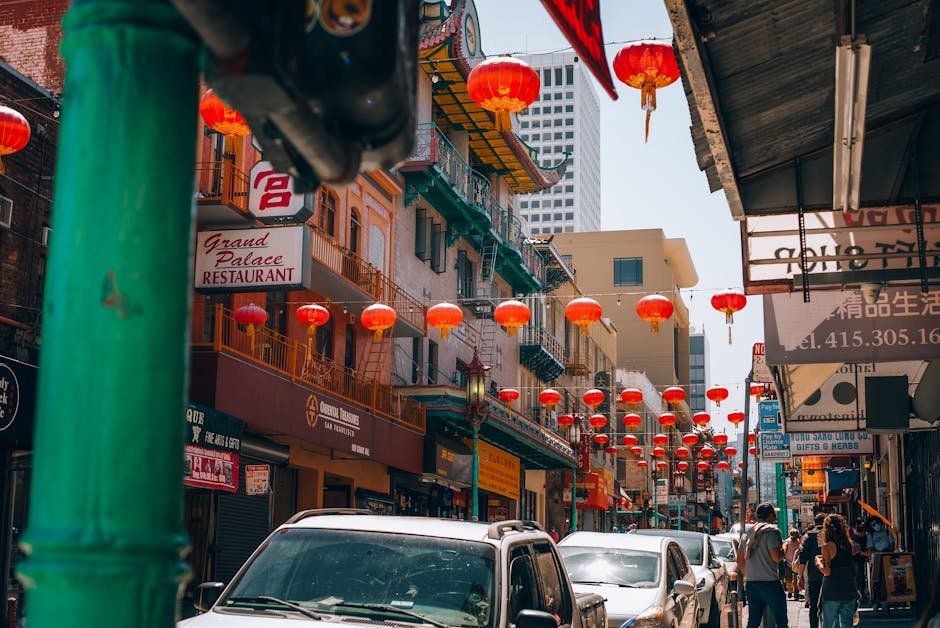
Chinatown. Its own world. Starting with that huge, colorful gate, you know, the one with the pagoda roofs and all the Chinese designs? This whole area looks wild. Not traditional China. Not American either. More like a super colorful, carefully built theme park.
That look? No accident. After the massive 1906 earthquake. Chinese merchants, they were gonna get kicked out. But they worked with the city instead. So hey, they rebuilt it. Made it a tourist spot on purpose. Hired architects who just imagined China, instead of knowing it firsthand. That smart move saved ’em. And boom, San Francisco’s Chinatown became a big deal, showing other Chinatowns how to rebuild.
You want the real deal? Forget Grant Avenue, full of souvenirs. Head to Stockton Street. Locals shop here. So real. Fresh everything: produce, live seafood, grab-and-go meals, old-school Chinese medicine. It bustles like 1980s China.
Eating here? Loads of tourist traps, okay. But you can always count on the hole-in-the-wall dim sum stands for Cantonese classics like shrimp dumplings and shumai. Cheap, and usually best.
Pro-tip: Bring cash to San Francisco’s Chinatown. Seriously. Some awesome little places? Cash only.
North Beach (Little Italy): Home of Cioppino, a Seafood Stew Reflecting Italian-American Heritage
From Chinatown, it’s just a quick step to North Beach. Little Italy, baby. Super chill area. Huge Italian-American vibe. And freshest seafood.
North Beach’s famous dish? Cioppino. Italian fishermen made it up. Used whatever fish was left over from the day. Stewed in a killer tomato broth. Garlic, onions, herbs. Now it’s fancy: crab, shrimp, calamari, mussels, clams. Totally San Francisco’s vibe. A boss icon.
The Mission District: Murals Tell Community Stories
Next, down south to the Mission. SF’s Latino spot. Mix of Latin and Afro-Caribbean stuff. Taquerias, fruit stands, little shops. Dive bars, thrift stores. But the murals? Hundreds of ’em. On walls, in alleys. Huge outdoor art, telling mad stories.
Those murals aren’t just pretty. They show where the neighborhood came from. The good and bad for folks living here. And they seriously comment on society and politics. Not just art. It’s how people show what they believe. Fighting to keep their spot against gentrification, in this crazy expensive city. The biggest outdoor gallery on the planet. More murals here. And get this: the artists? Not fancy types. They’re your neighbors. Making the Mission unique.
Mission-Style Burritos: Giant, Flavorful SF Icons
Okay, the Mission. Can’t forget the food. Mission-style burritos. These things are legendary. They’re HUGE. A whole meal. Big tortilla, packed. Meat, beans, guac, salsa. Sometimes grilled all crispy.
La Taqueria, for instance, makes ’em famous. Two-hand job. Got to try one. Adventure time? Get real beef head, or tongue. Totally a San Francisco thing.
The Annual Carnival Parade: A Huge Mission Cultural Mash-Up
Want culture? Go for the Mission’s annual Carnival Parade. Not just a parade. Takes a whole year to plan. Twenty whole blocks of party. It’s not just one culture, either. Mix of Mexico, Colombia, Brazil, Peru, Nicaragua, all that good stuff.
Seventy years strong! The district’s soul, right there. Seeing all those cultures, celebrated home-grown? Wild.
Frequently Asked Questions
Q: Cash in Chinatown?
A: Lots of the smaller, real deals? Cash only. Makes life easier.
Q: Cioppino from where?
A: Italian fishermen in North Beach. Took their leftover fish, threw it in a tasty tomato broth.
Q: Mission murals mean what?
A: All those murals? They tell the hood’s story. How people struggled, what they celebrated. And some strong social and political thoughts.