California Power for Travelers: Don’t Fry Your Gear!
Ever stick your hair dryer into an outlet abroad and just get smoke? Or maybe nothing at all? Sucks, right? Well, you’re planning on hitting up the Golden State, probably wondering about California Travel Electricity. Because it’s not just about the sunshine and good times here. Seriously, understanding how our power works is mega crucial if you want your phone to, you know, work. Don’t zap your electronics before you even reach the beach!
We Use 110-Volt Outlets Here
Okay, listen up. First things first: California, like pretty much all of North America, uses totally different juice than a huge chunk of the world. Loads of countries are all about 220 volts. But us? We’re firmly 110-volt territory. And that’s not just some random number. Big difference.
The deal is huge. Travelers from 220V places might find their stuff acting weird. Try hooking up a 220V gadget to a 110V outlet without the right adapter, and boom! Broken device. Or it just barely works. Picture this: a 2200-watt thing needs 10 amps at 220V. But at 110V, that same gizmo demands a whopping 20 amps. Double the current!
And sure, 220V can give you a nastier zap, but our 110V system often means devices pull more current. This then means thicker wiring in homes to handle it all. Can even bump up construction costs for cables. Good bit of info, ain’t it?
Plug Adapters vs. Voltage Converters: Get It Right!
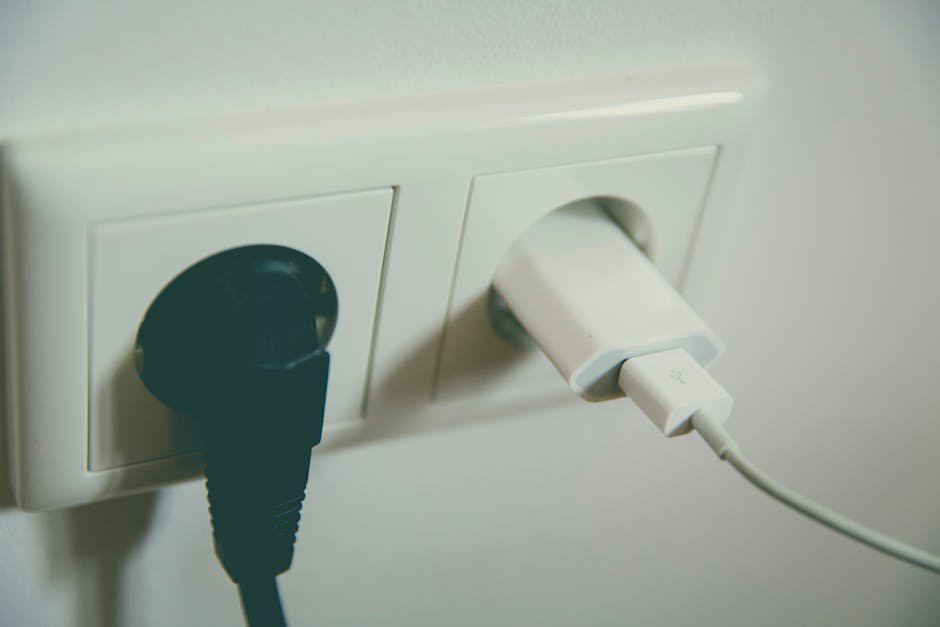
This is where a lot of people mess up. Oh, outlet doesn’t fit? Grab a cheap adapter. Hold up. Big mistake, often. An adapter? That just changes the physical shape of your plug. It does squat for the actual voltage. Zero.
And another thing: a voltage converter, that’s the real hero. This gadget actually changes the electricity’s voltage. You’re going from 220V to 110V (or vice-versa)? Need a converter. Don’t ever mix them up. Plugging a 220V-only device into a 110V spot with just an adapter? Absolute disaster waiting to happen.
Check Your Gadget’s Power Stuff: Voltage, Current, Power (V, A, W)!
Before you plug anything in, just take a peek. Seriously. Every electronic device has this tiny label. It tells you what it needs. Look for “INPUT:” Then you’ll see voltage (V), current (A), and power (W).
Many newer devices, like phone chargers, laptops, and little electronics, are “dual voltage.” They’ll usually say something like “Input: 100-240V, 50/60Hz.” If you see that? You’re golden! Just need a simple plug adapter. But for big-power things like hair dryers, curling irons, or travel kettles, they often are not dual-voltage. They’ll specifically say 220V or 110V. Big warning! Double-check! Your device’s actual life depends on it.
Don’t Play With Electricity, Man. It’s Dangerous!
Electricity isn’t a game. Hooking a 220V device straight into a 110V outlet without a converter? Not only will it trash your stuff, but it’s a real safety hazard. Sparks. Too hot. Smoke. Danger. And if you somehow manage to connect a 110V gadget to a 220V source without a converter? Immediate damage. Fire risk.
Think of it like this: your hairdryer needs a specific amount of electricity flow. Too little? It barely works. Too much? Overheats and dies. Or, even worse, the household wiring fries.
California Outlets Give 15-20 Amps, But Overload It, And BAM!
Our normal household outlets usually dish out 15 to 20 amps, typically at 110V. Your device will only take what it needs, up to that max. Small phone charger? Barely any draw. But plug in a big hair dryer and a travel kettle and charge your laptop all on one outlet, maybe even with a power strip? Dude, you’re asking for trouble.
Push a circuit too hard, and the circuit breaker (our version of a fuse box) just trips. Cuts the power instantly. Protects the whole system. Annoying, sure. But far better than a house fire. And if your circuit breaker keeps tripping? That’s a huge warning. You’re trying to pull way too much juice.
Get the Right Adapters and Converters. Just Do It
So, what’s the bottom line? Gear up. For most modern, low-power electronics, a basic plug adapter is fine if they’re dual-voltage (check that label, seriously!). But for high-wattage beauty tools or older, single-voltage appliances? Absolutely need a voltage converter. Think of it as peace of mind. Plus, it saves your expensive tech.
Match Adapter Output to Your Device. Crucial!
It’s not just about the plug shape or the big voltage numbers. When using an electrical adapter (like for charging a specific battery or modem), you gotta check its output details: voltage (V) and current (A). Your device will tell you what it craves.
Say your modem needs 12 volts and 1.5 amps DC, for example. Don’t use an adapter that only gives out 12 volts but just 1 amp. The modem might not work right. Or the weak adapter could just overheat forever. While it’s cool (even good) to use an adapter that provides more current than your device needs (your device only sips what it requires), it’s never okay to give it less.
California. Total chill zone. For fun times, not electrical problems. A bit of planning, and your electronics will be happy campers.
FAQs (Quick Hits)
Q: Is 110V power safer than 220V if I get zapped?
A: Yeah, generally. Any jolt is bad, but 110V in California is considered less dangerous for accidental shocks than higher voltage systems like 220V.
Q: Can I boost an adapter’s current if it’s too weak for my device?
A: You bet. If you have a couple of identical DC adapters with the same voltage, you can hook them up in parallel. Increases the total current. Basically, combines their juice. Two 350-milliamp adapters in parallel? Provides 700 milliamps. Just make sure the adapters are identical. And connect them correctly! Positive to positive, negative to negative.
Q: Why do 110V systems need thicker wires than 220V for the same power?
A: Because physics. Power (watts) comes from voltage (V) times current (A). Halve the voltage (like 220V to 110V) but keep the power demand the same? Blammo! The current has to double. Higher current needs fatter cables. Stops them from getting too hot. Keeps things safe. It’s just how it works.